
WHEN CHRISTMAS DOESN’T GO TO PLAN

“You’ve only got 18 Christmases with your kids. Make ‘em magical, Mama!”

Parents, no doubt you’ve also come across chipper little guilt trips like this (conveniently linked to a Pinterest board with about a hundred ideas for Christmas crafts, activities, baking projects, and clever traditions guaranteed to make the holidays magical and memorable) while you’ve been absent-mindedly scrolling through social media.

While I’ve worked hard to free myself from the burden of unrealistic expectations through limiting my social media use and choosing not to let comparison to others rob me of my joy, occasionally I’ll feel that all-familiar mom-guilt creep in and I’ll start questioning if I’m doing enough for my kids. Then I’ll jump right on the bandwagon of planning out a “magical” Christmas season full of wondrous activities that my kids may or may not even enjoy. 

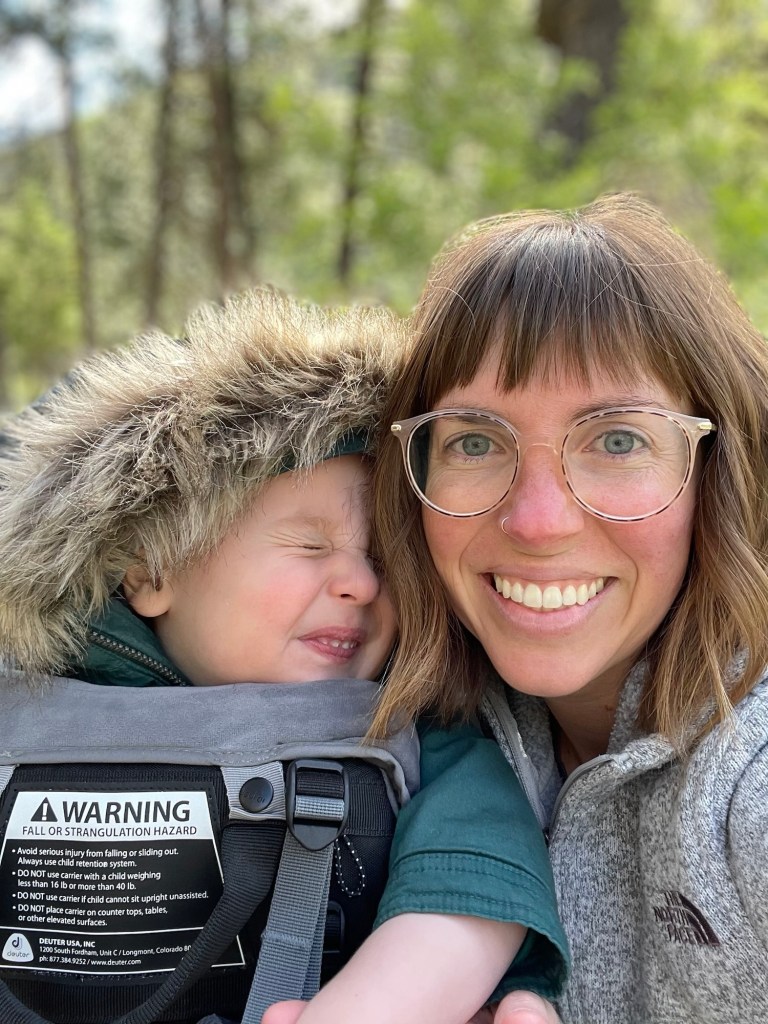
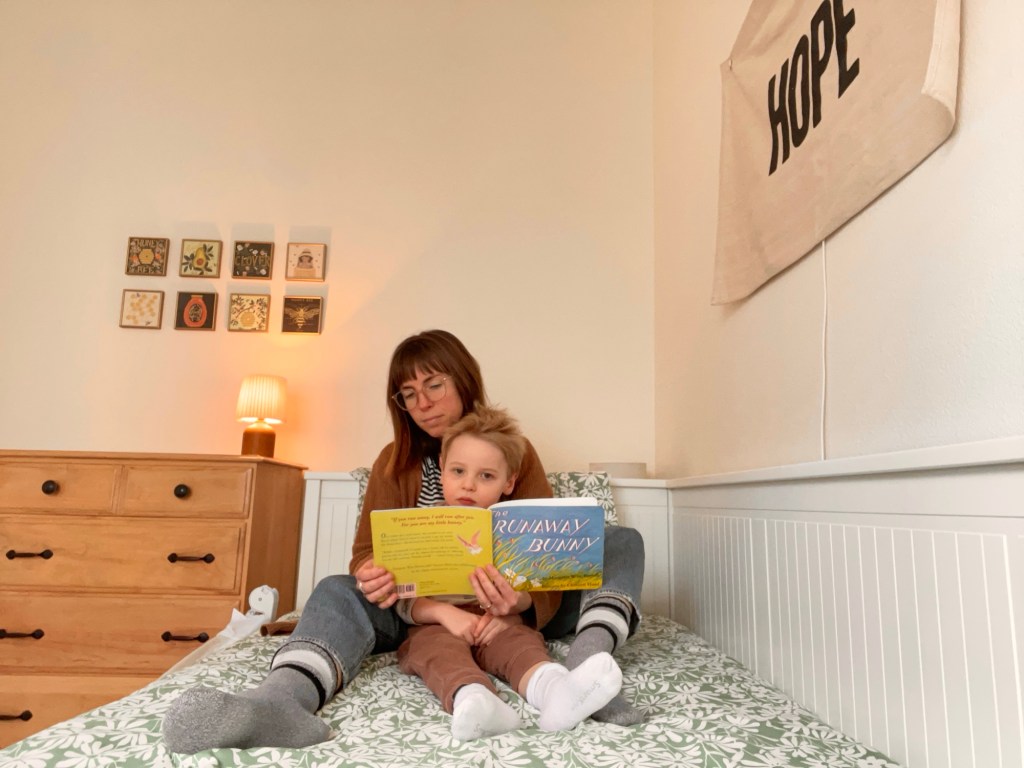
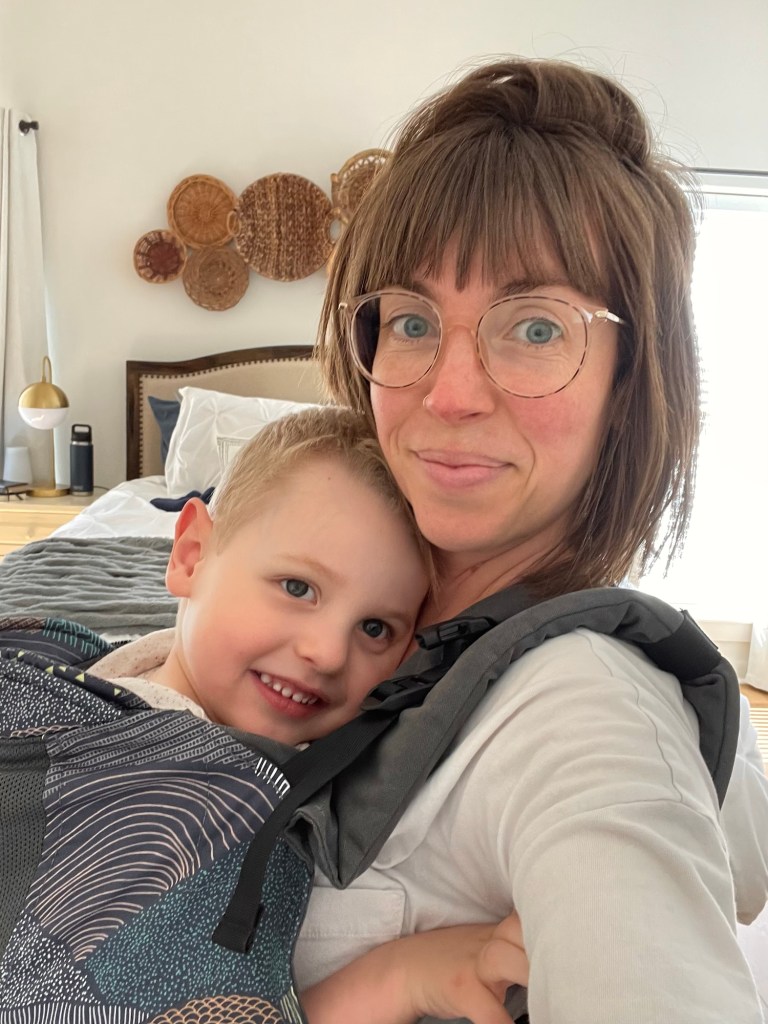
Well, with Christmas just days away, I can officially say that none of my plans have come to fruition, and the Christmas season in the Miller household has been anything but “magical.” For the last week and a half, ALL FIVE of us Millers have been fighting the virus to end all viruses. We’ve fared fevers, chills, bodyaches, and debilitating exhaustion. Only to roll into phase two consisting of sore throats, coughs, and never-ending congestion. With young kids, our home is no stranger to sickness, but this has got to be the sickest our family has ever been. All at the same time. Earlier in the week, Daniel and I alternated spending half the day in bed while the other had the excruciating task of caring for three sick kids. When you barely have the energy to lift your hair dryer, lifting and caring for your disabled 5 year old son is nearly impossible. It’s been rough over here to put it mildly. 

Over the last 10+ days, my kids have missed their class Christmas parties and ice-skating field trip. We’ve baked exactly zero gingerbread cookies and cut out zero paper snowflakes. We haven’t made treats for our neighbors or walked through Winter Wonderland Christmas Light displays. We haven’t made salt dough ornaments or decorated sugar cookies. We’ve been too busy just trying to survive. 

I’ve found myself bemoaning the lost time and moping about how this Christmas season has not gone to plan. Yet, in the midst of my pity party, God showed up. He worked through the hearts and generosity of His people to show our family love and provision in incredible ways. 

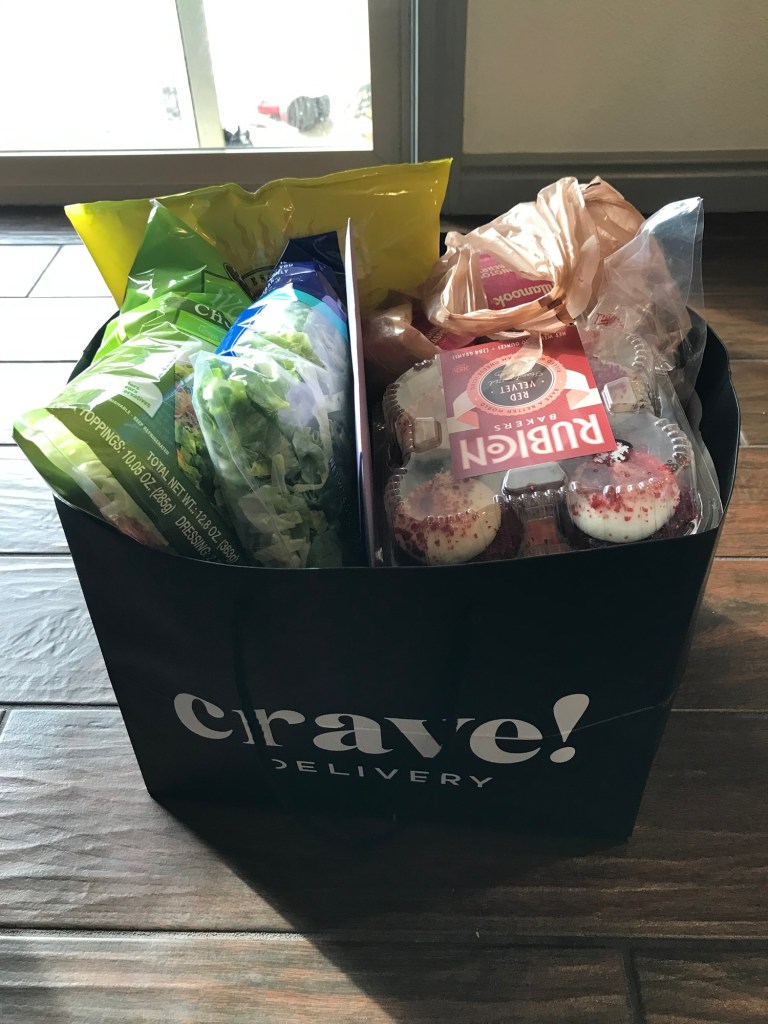
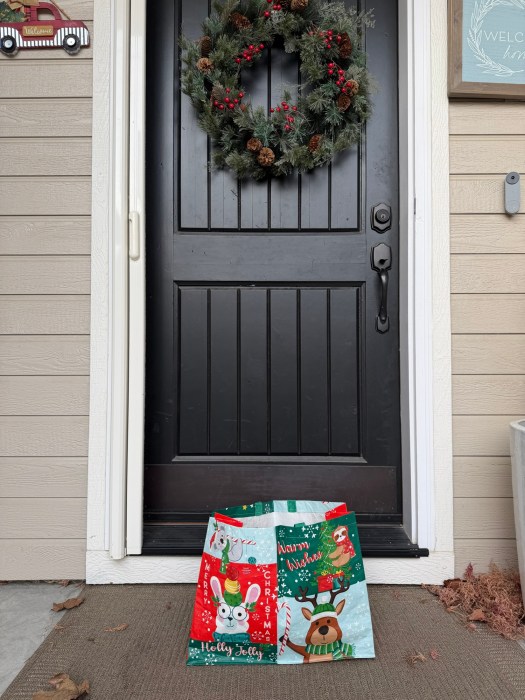
This week, we have had multiple friends show up with homemade chicken soup, breakfast burritos, and full dinners. Bags have been delivered to our front porch full of boxes of tea, popsicles, crackers, orange slices and countless easy snacks for the kids. There have been bags of puzzles and coloring books meant to quietly entertain our kids. Friends have grocery shopped for us and walked our dog when we could barely get off the couch. 
With each unexpected front porch delivery, I found myself crying at the realization of my very own “George Bailey” moment. If you’ve somehow made it this far in life without watching It’s A Wonderful Life, the final scene displays George Bailey, completely down on his luck on his very own Christmas that had not gone to plan. There are unwarranted charges of fraud against him and there is a warrant out for his arrest. Without any explanation apart from “George is in trouble,” Bailey’s entire community rallies around him to raise funds and show their support for their friend— no questions asked. 
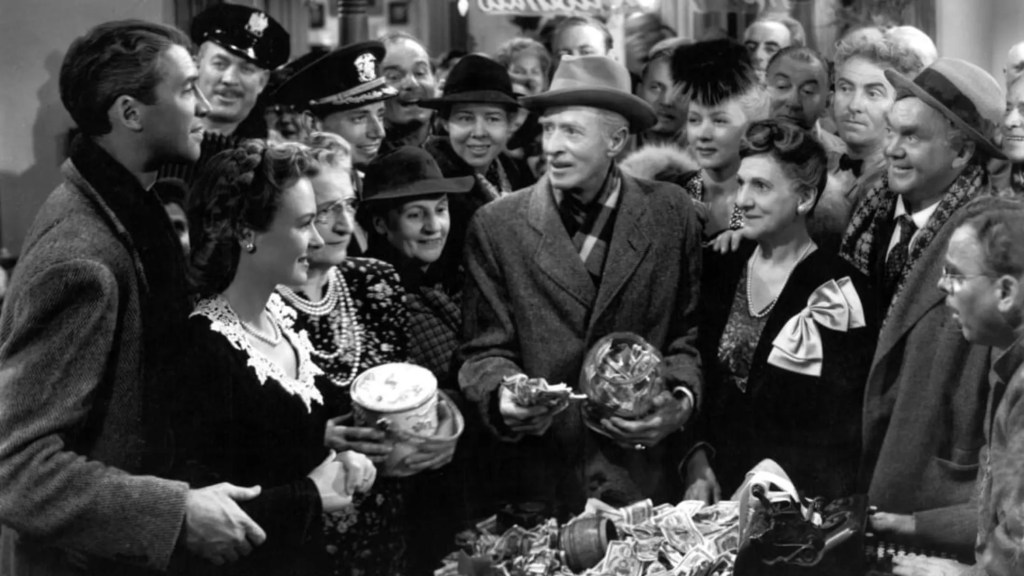
Still from It’s a Wonderful Life (1946). | Paramount Pictures

I felt so humbled to be the recipient of that kind of love this week. To have friends pause their busy lives to show up for you in practical ways, expecting nothing in return—this is a true gift that reflects the heart of God. I’m convinced that there is a special reward in heaven for those who don’t simply ask “do you need anything?” but train their eyes to see the needs, and then jump in to fill them. 

In addition to showing me His care and provision this week, God has also forced me to slow down long enough to think about another Christmas that certainly did not go to plan—the very first Christmas. Granted, young Mary was not strapped with the burden of creating a “magical Christmas” for a housefull of kids—she was merely tasked with bringing her firstborn child, God incarnate, into the world. No big deal. 

An unwed pregnant teenager, no doubt dealing with the scrutiny and judgment of others, Mary’s “Christmas season” was already off to a rocky start. Factor in over a weeklong roadtrip from Nazareth to Bethlehem either on foot or on a donkey for an untimely census. Imagine arriving in town, 9 months pregnant and exhausted, only to have door after door shut in your face when you inquired after a place to sleep. With no other options, Mary and Joseph settled into a filthy barn to rest for the night. I imagine Joseph desperately making a makeshift “bed” out of a pile of hay for his betrothed. Mary—miles from home, her mother, her friends, or any familiar female companions, would prepare to deliver her very first baby into the world with only the help of her young, inexperienced fiance. I can’t begin to wrap my mind around the fear Mary must have felt in this most life-altering moment of her life.  When her baby boy entered the world, Mary did not lay him down in the hand-crafted cradle that surely awaited him at home, but instead gently placed the King of Kings in a humble feeding trough. 

I’m guessing almost every detail of the first Christmas story we’ve all become so accustomed to did not go according to Mary’s plan. What kind of birth plan involves being exhausted, far from home, and surrounded by animals for anyone’s baby, let alone God’s son?

Yet, even when all did not go according to Mary’s and Joseph’s plans, God still showed up. He still accomplished what He set out to do. God came to gift us. He came to bless us. To provide for us. Not the other way around. All we do is show up. He does the rest. Even the wise men’s generous, well-meaning gifts for the King paled in comparison to the gift He was bringing to them—Himself.

So as I think on the Christmas season we are currently having, and I recognize just how empty-handed I am in what I’ve had to offer my kids and my God—it’s as if God has invited me to sit back, relax, put my slippered feet up and rest in the truth that it’s not about me and what I bring to the table anyway. This year, He’s invited me to slow down and marvel at His provision, love, and care for me and my family that He’s showing just as much today as He did 2000 years ago. 

Christmas has never been about ice skating or how many cookies we bake. It’s not about how much “magic” I can pump into the month of December. It’s only ever been about God’s great love for us. This year, we haven’t done many of the traditional Christmas things we typically do. We’ve had to let a lot go. But we have sat around our kitchen table over bowls of chicken soup, discussing the names and attributes of the God we are celebrating this season. Jehovah Jireh—The Lord Provides— felt especially personal this year.  

REMEMBRANCE

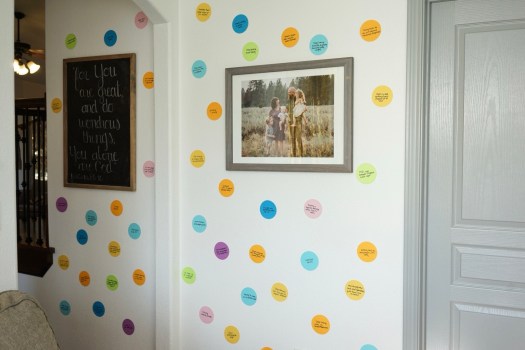
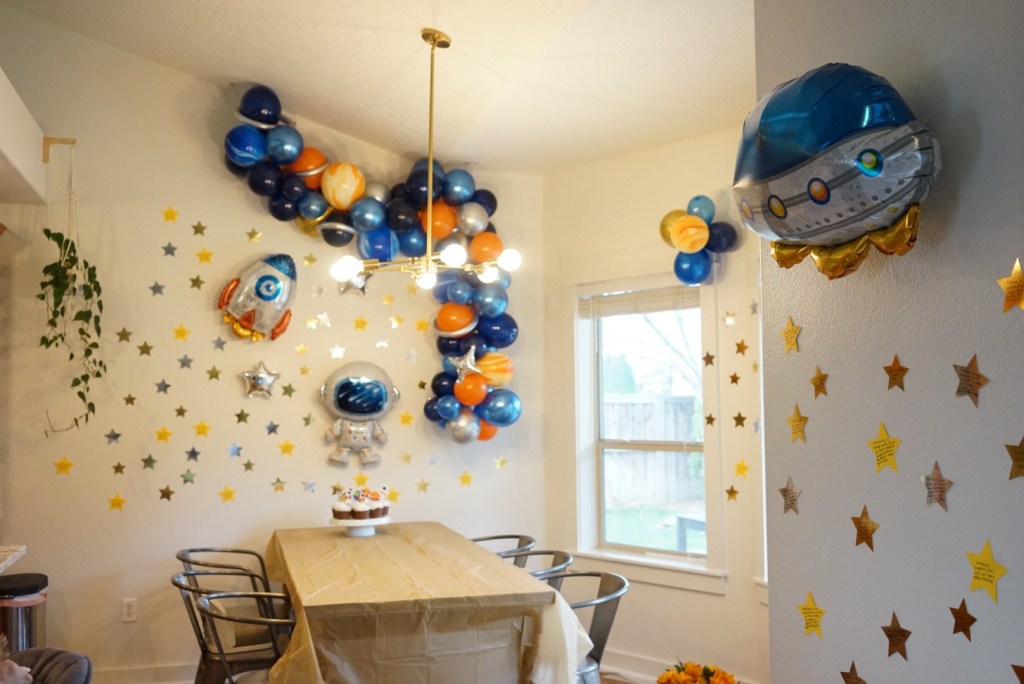
For the last five years, we have used Shepherd’s birthday as an opportunity to reflect on the past year and remember all the ways God has blessed us, answered prayers, and shown His faithfulness to our family. Each year, we come up with hundreds of examples, both big and small, that are evidence of how God is with us and for us. We write our blessings on birthday-themed “confetti” and decorate our walls. 

The more time I spend in God’s Word, the more I notice the call to remembrance. It is a steady theme throughout scripture, but I’d like to highlight a few examples that have stood out to me. 

The book Deuteronomy largely acts as Moses’s last big send-off speech to the Israelites as he was about to pass the baton of leadership to Joshua before they headed into the Promised Land. In reading through Moses’s parting words, I was struck by how many times he called for the Israelites to simply REMEMBER God. He urged them to:

Remember how God freed you from slavery.

Remember how He delivered you from your enemies.

Remember how He led you day and night through the wilderness.

Remember how He provided manna and water and met your every need.

Remember how He never left or abandoned you.

Remember how He was faithful and kept His every word.

God even established annual feasts and holidays, rich with tangible symbolism, for the Israelites to commemorate these momentous events in their lives and to help them remember Him. God knew they were a forgetful bunch so He graciously gave them yearly parties to help them in this department. 

Following in Moses’s footsteps, Joshua led the Israelites faithfully into the Promised Land and witnessed the power and provision of God countless times. From miraculous military feats with unlikely battle tactics to stopping the flow of the Jordan River to allow the Israelites to pass through on dry ground—these people witnessed the impossible and knew God alone deserved the credit for their victories. If you want to have your mind blown, read through the book of Joshua—who but God brings military defeat through marching, trumpets, shouting, giant hailstones, and making the sun stand still? There is far too much to detail here, but the takeaway is that God is all-powerful and when His people look to Him for their help, victory is certain.  

The miracle of God holding back the waters of the Jordan River for the Israelites to walk through it was reminiscent of how He’d parted the Red Sea when His people fled Egypt forty years prior. Since the latter miracle was displayed for the previous generation of people, it is likely that God was reminding this new generation of what He was capable of. God did not want his people to forget that He was their all-powerful provider, protector, and way-maker, so He instructed Joshua to have a man from each of the twelve tribes gather a large stone from the center of the Jordan. They would bring these twelve stones into their camp and set them up as a memorial— a tangible reminder of God’s hand at work. The intention behind the memorial stones was that one day their children would see them and ask what they meant, giving the Israelites the opportunity to not only reflect on God’s faithfulness themselves, but also to teach their children about all God had done for them.  

Fast forwarding many years in the biblical narrative, we see the idea of tangible reminders yet again in the book of 1 Samuel. After the Israelites turned from their idols and repented of their wayward living, God granted them victory over their enemies, the Philistines, in a supernatural way (1 Samuel 7). Their leader and prophet, Samuel, set up an Ebenezer as a stone of remembrance saying, “Thus far the Lord has helped us” (1 Samuel 7:12). Samuel wanted the “stone of help” to be a physical, visible reminder of how God had acted on His people’s behalf every time the Israelites saw it. 

Throughout scripture, God’s call to remembrance is not only for the Israelites, but for us as well and it serves more than one purpose. God desires for us to have humble hearts of gratitude and acknowledge that the blessings in our lives are not due to our own striving, but due to His abundant mercy (Deut. 6:10-12). He also wants us to recognize the consistency of His faithfulness so we can face all future circumstances without fear, knowing that God will always be with us just as He’s always been (Deut. 7:18-19). 

Corrie Ten Boom, one of my favorite pillars of faith once said, “Never be afraid to trust an unknown future to a known God.” This type of fearless faith is only possible when you choose to REMEMBER who God is and what He has done for you.

Our family has found the practice of remembering God’s faithfulness to be critical for us in combating our fears and cultivating humble, grateful hearts as well. Shep’s birthdays have a way of unearthing our grief over what has been lost and our fear over what the future holds for him and our family. We’ve learned the best way to fight grief is with gratitude. The best way to fight fear is clinging to faith in our faithful God. Our gratitude and faith are increased when we take the time to look back and remember who God is and what He has already done. We can trust God because He’s proven Himself trustworthy. 

Our annual reflections have not only been a spiritually healthy practice for us, but they have been an amazing opportunity to teach our kids about God’s faithfulness in a way that is personal and applicable to them as well. Writing our blessings out on tangible pieces of “confetti” is powerful as it gives us a visible display of the abundance of God’s goodness— plus, it’s super festive! Win win!

This is my encouragement to you to adopt a habit of remembrance as well. Whether you opt for ebenezers, memorial stones, or blessing confetti— find a tangible way to represent God’s faithfulness and remember just how good He’s been to you. Watch your gratitude and faith increase as you fix your eyes on who He is and what He’s done for you.

A LETTER TO MY SON

My Dear Shep, 

You turn 5 this week. 

I’d be lying if I said this birthday wasn’t hitting me hard. For starters, you’re my last baby and 5 is just. so. old. Having my youngest child turn 5 graduates me from a young mom to just a plain old mom. How did we get here?? 

Birthdays are always bittersweet with you, my sweet boy, but 5 feels especially hard. Five is the year many kids are learning to read, taking the training wheels off their bikes, starting Kindergarten, making first friends at school. But for you, five won’t be any of those things. And even after all this time of getting used to that realization, it still hurts. 

Each year, you are growing and changing so much physically—you’ve already lost your first couple teeth and gained two adult ones and I am NOT okay with it. You’re bigger and stronger than you were a year ago and it’s getting harder to carry you around. Your body keeps aging, but your mind and soul are still so, so young. My little Peter Pan, it feels like you’ll never fully grow up. How is it possible for this very thing to feel like a gift and grief? Maybe one day we will celebrate a birthday without it feeling like ripping off a scab. But maybe we won’t. And that would be okay too. Because scabs are a sign of healing—which has already begun, but won’t be complete until Jesus calls us home. Until then, sadness and joy can both have a place in our home. 

I don’t know all that five holds for you, Shep. Maybe this is the year you learn to sit all by yourself. Or walk around the house in your gait trainer. Maybe you’ll sign or speak your first word. Or maybe you won’t do any of those things. 

But I do know that this year, you will smile ‘til your whole face squints. You’ll hold my finger tightly in your hand. You will laugh hysterically at leaf blowers, lawn mowers, trash bags being opened, and at absolutely nothing at all. You will blow raspberries at dinnertime and fling food on the floor. You will squawk loudly in quiet places and never feel ashamed of a fart. You will listen to your favorite songs and start rocking back and forth when a real banger comes on (Wheels on the Bus, I’m looking at you!). This year, you will be tickled by your brother, smothered with kisses by your sister, and snuggled by your mama and daddy. You will bring joy to everyone who has the privilege of knowing you. Because that is just who you are. 

Coming up on half a decade with you, it’s hard not to reflect on just how much life has happened for our family over the last 5 years. I remember holding you in the hospital the night you were born. You were swaddled in a brown muslin blanket and adorned with a little pixie bonnet I’d crocheted. Your daddy and I looked into your sleepy face and adored your long fingers and toes, and we wondered aloud what you’d be like as you grew. 

You are nothing like we expected you to be. You have been our greatest surprise in life. 

And if I’m being honest, for someone as Type A as me, surprises can be a challenge. 

I remember early on in our journey, I was so determined that if I worked hard enough and did everything right, we’d help you catch up and close your developmental gaps.  Each day, I was playing the roles of physical therapist, speech therapist, feeding therapist, and occupational therapist in addition to carting you around to see all the real professionals we’d lined up to help you succeed. Every moment of the day was a chance to be working on developing skills. I wouldn’t allow myself to just sit and snuggle you. I’d prop you up away from me so you could be working on your head and neck control. I wouldn’t allow myself to just play with you—I had to turn every minute into a teachable, skill-building moment. I was trying so hard to wear all the hats that I forgot how to rest in my most important role—mom. 

By His grace, God has helped me to trust that He alone is sovereign over your progress. We still do all the therapies, but I’ve learned to stop putting all my hope in them. I’ve learned to slow down and actually enjoy you where you are at and stop striving so hard for more. Today, we snuggle, we read, we go for long walks, we listen to music, we blow bubbles. I’m no longer trying to “fix” you. I’m learning to embrace you fully. Because you don’t need another therapist. You need a mom. If all you ever learn from me is that you’re loved, it will have been enough. 

God has been so good to us, Shep. He’s proven Himself faithful. Proven Himself near. He is working all of our hard things for good. He has given so much peace and joy in the midst of hardship. I never thought we’d be where we are today. But I should’ve expected God to exceed my expectations. That’s just what He does. 
Shepherd, as we celebrate your 5th birthday, I am reminded of the gift you are to me. You love unconditionally. You rejoice at the simplest things in life. You smile with your whole being. You laugh with abandon. You are a daily reminder to me that the value we ascribe to trivial things and worldly successes is so often misplaced. You remind me of simple truths. You show me God’s heart for the least of these and paint a vivid picture of how God’s upside down kingdom works. Shep, God giving me you was the best thing that could’ve ever happened to me. You woke me up. God has used your life to refine my faith and transform who I am as a person more than anything else in my life. I am so thankful for you. 

I don’t know what the rest of our life’s journey will look like, but I’m so grateful I get to do it with you. I love you more than you’ll ever know. 

Love, 
Mama

WRESTLING

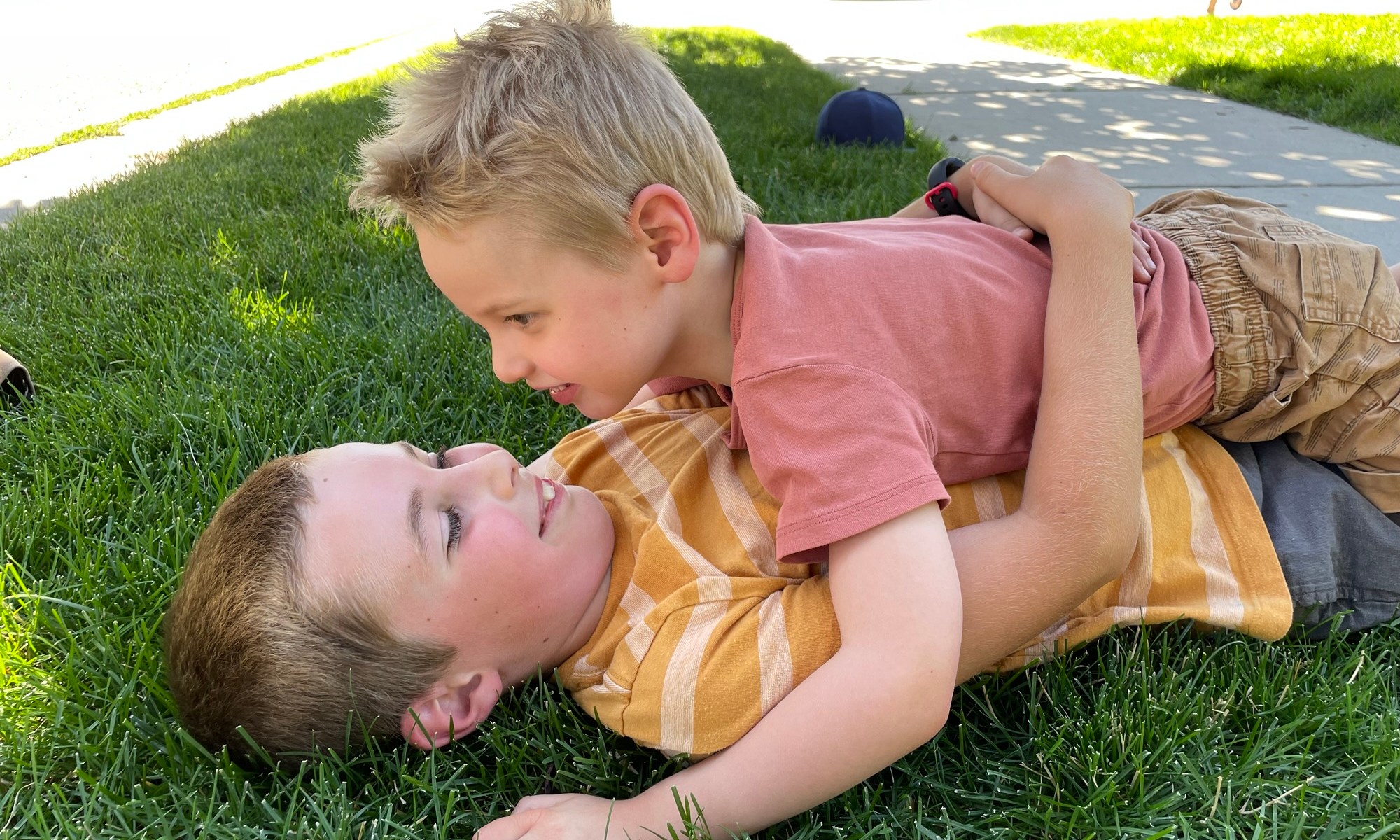
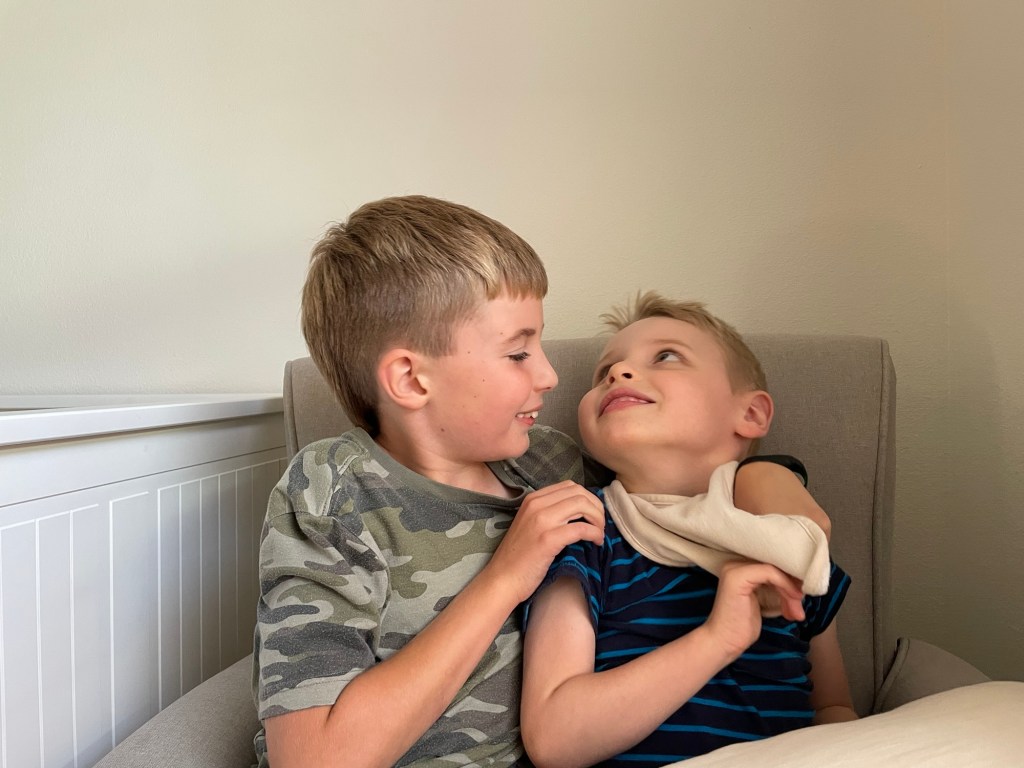
“Mom, I wish I had a brother to wrestle with. I love Shep, I just wish he could wrestle with me,” Harrison timidly confessed. 

“I know, buddy. I understand,” I replied. 

This was not the first time my 8 year old son shared this sentiment with me. I was simultaneously pierced by his words and proud of him for telling me how he really felt. I was struck by the irony that the very thing Harrison was pining after was exactly what he was doing—wrestling. He wasn’t wrestling with his brother. He was wrestling with God. 

My husband and I have had numerous conversations about how having a disabled son is not only going to impact us, but our other children as well. Just as we have had to process a reality that is far from our expectations and grieve losses, we will need to give Harrison and Poppy the space to process and grieve in their own ways. I shared in a post several months ago that our daughter Poppy is somewhat of an anomaly, in that she appears largely unphased by the setbacks of disability and has not skipped a beat since Shep entered our lives (thus far). 

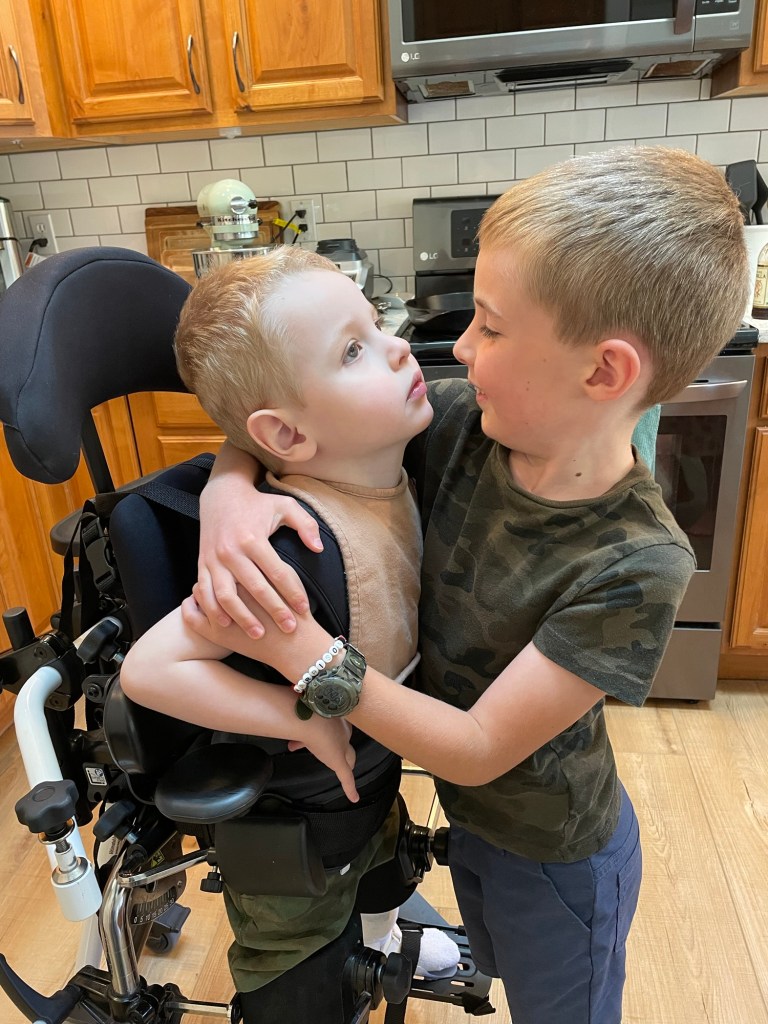
With Harrison, however, we’ve watched him work through his own struggles with having an atypical life due to the confines of disability. Harrison has had to surrender his expectations for what having a little brother would look like. Harrison won’t be teaching his brother to play catch or taking him for bike rides. They won’t love the same books or stay up late talking from a shared bunkbed. They won’t wrestle. Shep naturally slows down our pace of life, which is hard to swallow for my go-getter, extroverted, do-all-the-things son, Harrison. These are undeniable daily losses for him to grieve and he is learning to wrestle through these at a young age. 

While it can be easy to look at Poppy’s ability to take life’s setbacks in stride with great admiration, I’m humbled when I think about how much my journey with Shep mirrors Harrison’s.  I too, have wrestled with God and continue to do so. 

At times, within the Christian community, there is the temptation to race through our trials and feign “okayness” to try to prove to the world that our faith in God is solid and we cannot be shaken. Yet, in reality, taking time to wrestle with God in the midst of our hurt can actually prove to sharpen our faith and draw us nearer to God. 

The theme of wrestling appears repeatedly throughout scripture. Job was counted a righteous man and clung to God in the midst of losing every single thing he had— his family, his wealth, his health, his friends. We read his story and are inspired by Job’s initial response “‘Naked I came from my mother’s womb, and naked shall I return there. The Lord gave, and the Lord has taken away; blessed be the name of the Lord’” (Job 1:21). Yet, this same man goes on to say to God, “‘Show me why you contend with me. Does it seem good to You that You should oppress, that You should despise the work of Your hands’” (Job 10:2-3) and “‘Your hands have made me and fashioned me, an intricate unity; Yet you would destroy me’” (vs. 8). 

Job is asking the question we’ve all asked at one point or another in the face of hardship— “Why, God?” He is hurting and is not quite ready to take his undesirable circumstances lying down. While Job recognizes God’s sovereignty, he is still wrestling with God over why He would allow such terrible afflictions into His life if God truly made and loved him. This pendulum we see with Job swaying between “blessed be the name of the Lord” and “why me, God?” is oh, so human. Job was not unshakable. He had questions and doubts, and he brought them straight to God himself. Yet, he was still counted a righteous man. 

God meets Job where he is at, in the midst of his questioning, and in a somewhat frustrating turn of events, He does not answer all of Job’s questions. He, instead, reminds Job who He is. He is the all-knowing, all-powerful, omnipotent, sovereign God. Our understanding of the world and our own lives pales in comparison to His. This humbling encounter with God leads Job to repent of his pride, and confess that he “uttered what he did not understand” (Job 42:3).Their exchange ends with Job stating, “‘I have heard of You by the hearing of the ear, but now my eye sees You’” (Job 42:5). This back and forth wrestling match draws Job nearer to God and allows him to experience God more intimately than he ever had before. 

Another well-known man to wrestle with God in this manner was David, who authored many of the psalms. There are countless examples of David taking his authentic expressions of grief, doubt, fear, and anger directly to God. He wrestles through his own “why God?” questions when he is struggling with feeling abandoned and forsaken. The beauty of these psalms is that David’s unfiltered emotions are spilled out before God right alongside his expression of faith and trust in God, creating a tension—a push and pull—much like wrestling. This is evidence that our relationship with God is never one dimensional. It has depth, just like our other human relationships do. If you’re curious to read some of David’s wrestling for yourself, check out Psalm 13, 22, and 44 for starters. 

Finally, I would be remiss to not mention the strangest account of wrestling in the Bible. Jacob, a man who had been promised so much by God, still struggled with fear, insecurity, and doubt. The day before he was about to be reunited with the vengeful twin brother he’d cheated and stolen from, Jacob was afraid and cried out to God for deliverance (Genesis 32:11). Jacob spent a sleepless night alone in the wilderness until a “stranger” showed up. Jacob proceeded to physically wrestle with God all night. God touched Jacob’s hip socket, putting his hip out of joint, and Jacob stubbornly declared, “‘I will not let go unless you bless me!’” (Genesis 32:26). 

This odd story that occurred very much in the physical realm is a picture of the spiritual reality at play. Jacob was after God’s deliverance, His blessing, His peace. Those things could only be attained by drawing near to God and wrestling with Him through his fears and doubts. This wrestling match with God led Jacob to declare, “‘I have seen God face to face’” (Genesis 32:30) — an intimacy you cannot claim until you’ve gone toe to toe with God. My favorite detail of this story is that Jacob was left with a limp—a tangible reminder of his encounter with God. This mark of weakness that Jacob would carry with him daily would serve as a reminder of God’s strength, his own frailty, and the time that God drew intimately near. 

When I reflect on these three varied accounts, I see how God not only allows our wrestling, but invites us into it and uses it to refine our faith. It is normal to question “why?” when life does not go according to our plan. But so much hinges on where we go with our questions. God wants us to take our doubts, fears, questions and raw emotions to Him, not away from Him. We may not get all the answers we seek, but we just might get a closer glimpse of God Himself. 

You have to be close to someone to wrestle with them, and God is constantly beckoning us to come closer. Throughout scripture, God extends invitations for us to draw near to Him in verses such as these: “Come to me, all you who are weary and heavy burdened, and I will give you rest” (Matthew 11:28) and “Cast your anxiety on him because he cares for you” (1 Peter 5:7).  These are not empty words from a distant God. These are promises to meet our wrestling with a loving embrace.  God promises to draw near to us as we draw near to Him (James 4:8).
I want to add that true wrestling entails bringing your questions to God with the intent of actually seeking to find God in the midst of your mess. The New Testament is full of Pharisees who questioned Jesus with the motive of trapping and disproving Him. Their questions were not sincere—they had already made their minds up about who Jesus was. This kind of questioning is not going to refine your faith. But questions asked from a heart that is sincerely trying to find God in the valley, will do so. 

This is my prayer for my Harrison, and for myself—that we would have the courage to wrestle with God in our darkest moments and in doing so, we would see Him face to face. I pray we would not be left unchanged in our wrestling, but be granted the gift of a limp as a daily reminder of a loving God who draws near.  

And what about you, friend? With the heaviness in your own heart– are you wrestling with God or running from Him?

THE POWER OF PRAISE

We received Shepherd’s diagnosis when he was almost 16 months old. We had recently celebrated his 1st birthday which was a wildly different experience than the 1st birthdays of our older two children. The first year of Shep’s life was full of so many unknowns, so much fear, and sadness at the growing realization that Shep’s life was on a completely different trajectory than what we would have expected. We chose to celebrate intimately, with just the 5 of us. We decorated and had cupcakes that Shep could not partake of himself. It was a bittersweet day. 

Upon receiving Shep’s diagnosis just a few months later, our searching had finally come to an end as we now had a concrete explanation for Shep’s lack of developmental progress. While having an answer brought some peace, our grief scab was ripped wide open and we began mourning losses yet again. What we had suspected, we now knew with certainty—Shep wasn’t just delayed, he was disabled. Life as we knew it would never be the same. 

The months that followed were some of the darkest times of my life. Shep entered a long season of sleep disturbance that kept us awake all hours of the night for months. Grief coupled with sleep deprivation launched me into a spiral of depression that I had never known before. In addition to tending to Shep’s demanding needs and therapies, I had two other children under age 4 who still depended on me for just about everything. I was a shell of a person and was hardly coping. 

I knew that in my weakness I should be looking to God for my strength. I should be praying more and seeking Him. But I honestly did not have the words to say to God. I was shell-shocked by how my life had been completely upended and I didn’t have the capacity to talk to God about it. 

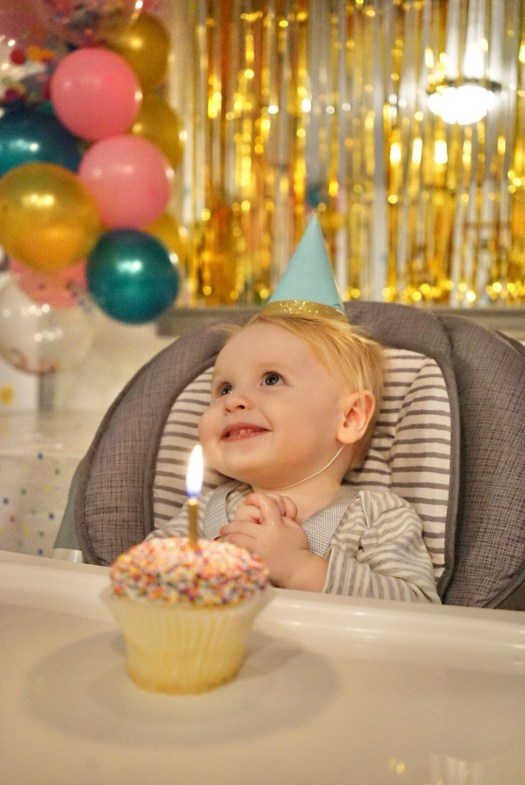
It was in this season that my husband, Daniel, sent me a text one day with a link to a spotify playlist that he had created. The playlist was entitled “Hope” and next to the title was a picture of Shep from his 1st birthday. He was sitting in his high chair behind the candlelit cupcake. His tiny hands were clasped together, a smile spread across his glowing face, and he was looking straight up. Somehow I had missed this picture when I had gone through his birthday photos. What I had chosen to remember from that day was how sad I felt. However, while looking at this photo, I felt joy. And Hope. 

Shep’s upward gaze is the simplest gesture that really appears like he is looking upward toward God. It felt like a reminder to me to do the same. To this day, I see this photo as a divinely orchestrated gift from God especially to me and I can’t help but smile when I see it. 

When I opened the playlist, I saw that Daniel had added several worship songs that brought him hope in this dark and heavy season. He invited me to add to the list, and together we would compile a list of hopeful anthems. 

This playlist became a lifeline for me in the valley I was in. It gave me the words to cry out to God when I could not articulate my own. The songs on this list are songs of questioning, weeping, grieving. Songs of surrender. Songs of joyful rebellion and refusal to let the enemy win. Somehow all the feelings of emotional turmoil I felt alone in, had been felt by other people in other situations who were inspired to write about it. A collection of inspired artists put words to the groanings in my heart and it was a complete gift to me.  I realized that while my situation might feel unique, pain is a universally shared experience and we all, at some point, are left kneeling before God holding the shattered pieces of our lives and wondering where we go from there. I was able to benefit from this universal human condition by singing the words others had penned when I could not formulate my own. 

I have learned that there is great power in praising God in the face of hardship. It is not denying the pain of your situation or making perfect sense of it all, but merely laying it down at the feet of Jesus and telling Him, “I trust you.” Praise is putting God back on His throne and taking myself off of it. It takes great courage to worship from the valleys, but I’ve found that it’s also the best way to pull you out of them. Worshipping God may not change our circumstances in the slightest, but it has the power to change us as we actively choose to align our hearts with His and trust in God’s character, even when it’s hard. Taking our eyes off our trials and fixing them on Jesus instead has a way of putting our problems in perspective. Praise is quite possibly the most powerful weapon we have to fight against depression, fear, and grief. Why wouldn’t we wield it boldly?

I’d love to share our personal Hope Playlist with you if you find yourself in a discouraging season. I encourage you to make your own as well that speaks to you in your specific situation. A dear friend of mine once told me that God often hijacks her Spotify account to have her hear exactly the words she needed that day—maybe He will do the same for you. 

Feel free to click the link and add this playlist to your account or listen below: Hope Playlist

I’ll close with lyrics from one of my favorite songwriters, Benjamin William Hastings:

So I will praise You on the mountain
And I will praise You when the mountain’s in my way
You’re the summit where my feet are
So I will praise You in the valleys all the same
No less God within the shadows
No less faithful when the night leads me astray
You’re the heaven where my heart is
In the highlands and the heartache all the same

Song: Highlands (Song of Ascent)

IT’S ONLY FOR A SEASON

I sat across the table from a few mom friends I hadn’t seen in a while, sipping coffee and eating banana bread, while nearly a dozen kids ran chaotically through my house at what the extroverts call a “playdate” and we introverts refer to as lowgrade torture. I jest…community is important. Even when it is utter chaos. 

My friends and I caught up on how the last several months had been and talked about childrearing, homeschooling, health and all the classic conversation topics on a mother’s list. The other women began commiserating on the woes of potty training and the frustration of trying to teach one of their children to read but how it just wasn’t clicking. Everyone was nodding in agreement at the hardships of these scenarios when one of the women said, “yes, well we need to remember that it’s only for a season. Your daughter isn’t going to start kindergarten in diapers. And your son will get the hang of reading eventually.”

It’s only for a season. It’s only for a season. I silently withdrew from the conversation, feeling isolated and well aware that this sentiment meant to encourage and provide hope did not apply to me and my motherhood experience. My son would start kindergarten in diapers. He would likely never learn to read. Or speak. Or walk. 

It’s only for a season. Where does that expression leave those of us to whom this phrase no longer applies? For some of us, these words leave us feeling anything but encouraged and hopeful. These words only heighten the realization that some “seasons” are really a lifetime and there is no end in sight for our struggles. 

I have felt trapped by the thought of being a caregiver to a disabled son until the day I die. I have felt robbed of the future I hoped for one day. I will be changing diapers, spoon-feeding, and lifting my son in and out of the bathtub until the Lord calls me home. 

While this reality is sobering and hard to swallow, it is actually evidence that my friend’s words “it’s only for a season” are, in fact, true. Lifelong struggle is still for a season, albeit a long one. Although it doesn’t always feel like it, this life we live on earth is a blip on the timeline of eternity.  James 4:14 describes my life as “a mist that appears for a little while and then vanishes.”  In Psalm 39, David cries out to God and asks Him to remind him of this truth when he says, “O Lord, make me know my end and what is the measure of my days; let me know how fleeting I am! Behold, you have made my days a few handbreadths, and my lifetime is as nothing before you. Surely all mankind stands as a mere breath” Psalm 39: 4-5

While the thought of mortality and the idea of my life being a fleeting vapor or mist might seem bleak at first glance, it is also a great comfort. As a follower of Jesus, I know my pain and hardship won’t last forever.  I trust the promise that when Jesus returns, “He will wipe away every tear from [my] eyes, and death shall be no more, neither shall there be mourning nor crying nor pain any more, for the former things have passed away” (Revelation 21:4).  My life on earth might be hard. Some hardships will last for short seasons and some for the “season” of my whole life – but even that is temporary. I have the hope of Heaven to look forward to where Christ will make all things new and end all suffering and pain. 

In the meantime, I can trust that God will equip me each and every day to get through what he’s called me to. 

Perhaps you, too, feel trapped in an unending season and feel crushed by the weight of your “no end in sight” circumstances. There is hope for you, my friend. Jesus already defeated death and is offering you an eternity without suffering. And in the vapor of our life on earth, He promises to walk through every season with us—the highs and the lows. 

COMPASSION: A GUIDE TO SUFFERING WITH OTHERS

I am not an instinctively compassionate person. I think compassion and empathy come naturally for some people (God bless ‘em!), but I’m willing to bet that most of us could use a bit of coaching in this arena.  

I’ve often thought of compassion as merely feeling sorry for someone who is hurting and recognizing the sadness of a situation. But compassion is much, much more than that. The root word of compassion (compati) literally means “to suffer with.” This is not a feeling, it’s an action. Compassion means stepping into someone else’s pain and wearing it with them and bearing it with them. This takes commitment. This requires sacrifice. It is hard enough to bear our own grief; it is a selfless choice to bear the pain of others.  

I remember in the early days after receiving Shep’s diagnosis, feeling acutely alone in my grief and aching for the peace of God and the compassion of others. It was an interesting opportunity to observe how others fare in the compassion department when met with a friend’s suffering. I had friends who quietly pulled away from me, uncomfortable in the face of pain, unsure of what to say to me. But I also had friends (and even acquaintances) lean in and truly suffer with me. 

As I’ve already stated, I am no compassion expert. I’m sure there have been many times when I too have withdrawn from others because I didn’t know how to respond to their suffering. But God has shown me a thing or two about what true compassion looks like through the people He has placed in my life at the exact time I needed them. So, I’ve compiled a mini guide for those of us interested in growing in compassion. This is by no means a comprehensive list, but merely the top three ways compassion has been shown to me in my seasons of suffering. 

  1. Presence

I believe the BEST way to show compassion is simply by showing up and being present with a friend in need. In the first week of receiving Shep’s diagnosis, my friend Amy showed up on my porch with a huge bag of food for dinner (and breakfast for the next day). I barely remember what I said to her or what she said to me, but that is not what mattered in that moment. Amy pulled me into a hug and we BOTH wept together for several long minutes. MY son was the one who received the life-altering diagnosis. MY life was the one that would forever be changed by the news we’d just received. Yet, here was my friend weeping with as much grief as if it had been her son instead. To this day, when I think of what it means to suffer with someone, I think of her. So often we get hung up on having the right words to say, and when we can’t find them, we withdraw to avoid feeling awkward. I’m here to say that there are times when the “right words” don’t matter. Being there matters. Hug your friend. Hold them while they cry. Cry with them. Just be there. Fight the urge to offer a silver lining perspective or quick-fix bandaid sentiments. Validate their pain by sitting with them in it and allowing yourself to feel the sting of it too. 

  1. Prayer

There is something so powerful about praying over a hurting friend. When you pray for someone, you are bringing their situation before the all–powerful God who alone can heal, provide peace, change hearts, and work all things together for good. Prayer is surrendering the illusion of control and actively trusting in the goodness of God. Prayer is standing in the gap and speaking life and truth over a friend who might not be in a season to articulate those things themselves. 

Praying for a hurting friend is powerful. Praying WITH that friend is even better. When you pray with someone who is grieving, you are lifting the weight of a burden that is too big for either of you to carry and laying it down at the feet of the only one who can. 

  1. Practical Help

I decided to stick with all P’s here just so it’s easier to remember. Alliteration is our friend. 

This aspect of compassion requires a sacrifice of time and energy. Part of suffering with others means acting on their behalf and providing practical help to ease their burden. Friends, I have never received an unwelcome meal. When you are grieving, getting dinner on the table for your family can feel like an insurmountable task. Bringing dinner to someone who’s hurting is an easy, practical way to show them that you are with them in their suffering. If meals on wheels were a love language, it’d be at the top of my list. 

I have also had friends provide practical help for me by: 

  • Watching my older kids so I could take Shep to appointments, 
  • Babysitting all my kids so I could go on much needed dates with my husband, 
  • Holding Shep at group gatherings so I could participate in discussions with fewer distractions, 
  • Offering to feed Shep so I could enjoy my meal while it’s still hot 

Obviously these examples are specific to my needs, but everyone has very practical needs like these—it just might take a little investigation to find out what your friend needs. 

A side note—most people are terrible at asking for help and many of us struggle to even accept help when it’s offered. Be a bit pushy with your love. Instead of “let me know if you need anything” (they won’t), try “I’d love to bring you dinner this week. Which night works best for you?” It’s much harder to turn this down!  

Another side note—you might not be called to show up in all three of these ways for every single person going through a hard time. Use discernment based on your closeness to the individual and pray that God would guide you. You may not always be in a season to offer each one of these forms of compassion, and that’s okay. But God could also be pushing you out of your comfort zone. Ask Him, and follow His leading.

Well, there you have it! My top three ways of showing compassion to others: presence, prayer, practical help. I’ve been so blessed by those who have ministered to my heart in these ways. I’m a total work in progress myself, but I’m grateful for the ways God has used my own suffering to open my eyes to the hurting of others. I pray He continues to help me grow in compassion. 

I’d love to hear from you too! What are some ways that you’ve experienced the compassion of others? 

THE GOD WHO SEES ME

My friend, Allie, walked me out to my car after Bible study ended and we had collected all our children from their classes.  As I was loading Shep’s stroller in the trunk of my van, she shoved a $20 bill in my hand and told me to treat my kids to lunch on the way home. 

“Allie, thank you, but you really don’t have to do that,” I said hastily. 

“I know I don’t have to. I want to,” she replied. “How are you, Katie?”

“I’m doing fine,” was my immediate default response. 

“No. Really. How are you?” she countered. 

I burst into tears upon her gentle insistence that I answer her not-so-simple question honestly. She actually wanted to know how I was doing. Even if the answer wasn’t pretty. 

I proceeded to share about the hardships we were having with Shep’s digestion and the constant guesswork it was to try to stabilize his system. I shared my heartbreak over how he’d been biting his hands and how self-harm was now a regular part of how he expressed big emotions. Like a broken fire hydrant, I spewed forth a list of hardships and intimate agonies we were facing daily that no one saw but us. 

Allie pulled me into a tight hug and held me there for as long as I needed. “God sees it all, Katie. He sees it all.”

Allie’s words were the furthest thing from a trite Christian response—they were reassurance from a friend who is no stranger to grief and hardship herself. Allie’s husband was left paralyzed after a dirt bike accident at age 15 and has spent the better part of his life in a wheelchair. She and her husband understand fully what it means to live with limitations and the pain of disability. 

Allie proceeded to tell me how she gets it. She knows where I’m coming from. She shared with me about the questioning and sometimes judgmental looks she and her husband get at the gas station when she gets out of the car to fill up the tank while her husband stays seated. How unseen she feels in that moment because the people around her literally do not see the situation at play behind the closed doors of their car.  And that is simply a small picture of what happens at a grander scale in their lives each day.  

People can’t always see the hurt and suffering that happens behind closed doors, in the privacy of our homes. Those of us with disabled family members can feel especially isolated in our pain, as we truly are in the minority of the people around us. Even within the community of disability and special needs, different diagnoses and the variety of needs are so vast that we can find little overlap even with the people we most closely associate. It’s a lonely road. I have found isolation to be one of the most powerful tools in the enemy’s toolbox. 

Yet, while our situations differ in their intimate details, suffering is a universal human experience. There’s not a soul alive who makes it through this life unscathed by pain or hardship. 

BUT we can take comfort in the truth of the words Allie spoke to me. God sees it all. God sees me. 

In the book of Genesis, a slave girl named Hagar was kicked out of her master Abraham’s home after she bore him a son per his wife, Sarah’s request. After Sarah had a son of her own, her hatred towards Hagar grew and she wanted her out of the picture entirely. Talk about a bum deal for Hagar—she was left destitute, alone, and hopeless because of the sin and choices of others. We find her in chapter 12 in the wilderness with her son, Ishmael, who is on the brink of death. In this rock bottom moment, God comes down and meets Hagar where she is at. He gives her hope for her future and promises provision for her and her son. Hagar’s response is to build an altar to the God she’d only heard about and to give Him the name “El Roi”—the God who sees me. 

Hagar undoubtedly faced hardships after this moment. Her life wasn’t tied up in a pretty little package with a bow on top. But she had the strength to move forward because she knew that the God of the universe saw her. He met her face to face and assured her that she was seen, known, and loved. 

We may move through life feeling like no one knows what we are going through. We may feel that no one really understands the depths of our pain or sees the intimate details of the hardships we face. And this may be true. But regardless of how many people around us see us, we can rest assured that God sees us. And at the end of the day, He’s the only one that really counts because He alone is the true source of comfort and peace. We are not alone. God sees it all. He is with us through it all. He offers peace and strength for our weary souls. And in His abundant kindness, He sprinkles friends like Allie along the way who “see us” too and are tangible reminders that we are not alone.

A DAY AT THE BEACH

Our family recently made the insanely long drive down to Southern California to visit my family for a week. We strategically planned our trip for early March, hoping to swap Idaho’s lingering winter temps for eternally sunny SoCal. Unfortunately, we found ourselves vacationing in cloudy, chilly weather accompanied by the probably two days of rain Orange County will see this year, while Idaho was hitting record warm temperatures during our absence. You can’t win ‘em all. 

In spite of the chillier weather, going to the beach was still high on the priority list for our land-locked Idahoan kiddos. So, bundled in our sweatpants and coats (layered over swimsuits— just in case), we headed to the beach.  

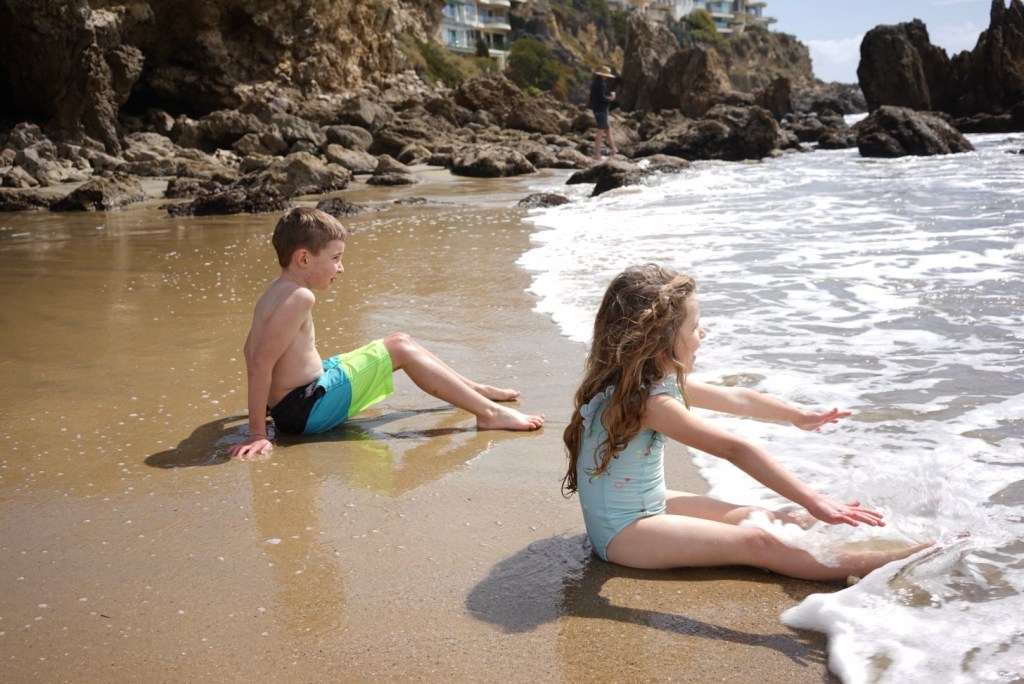
As soon as we arrived, uninhibited by the 50 degree weather and biting wind chill, Harrison and Poppy raced toward the ocean with full abandon. Joyous screams filled the air as they played a game of tag with the ever-crashing and receding waves. What I expected to be a “dip our feet in the water” experience turned into a full plunge as the kids stripped down to their bathing suits and allowed themselves to be pummeled by the waves. The freezing water could not dampen their joy and their sense of awe in the presence of one of God’s masterpieces. 

For a full minute, I stood there with my toes in the sand and the biggest smile stretched across my face, fully immersed in the simple beauty of my kids experiencing the ocean for the first time. And then, I wept. I wept over the one piece missing from this idyllic scene that would forever be seared into the “family memory” file of my brain: Shep. 

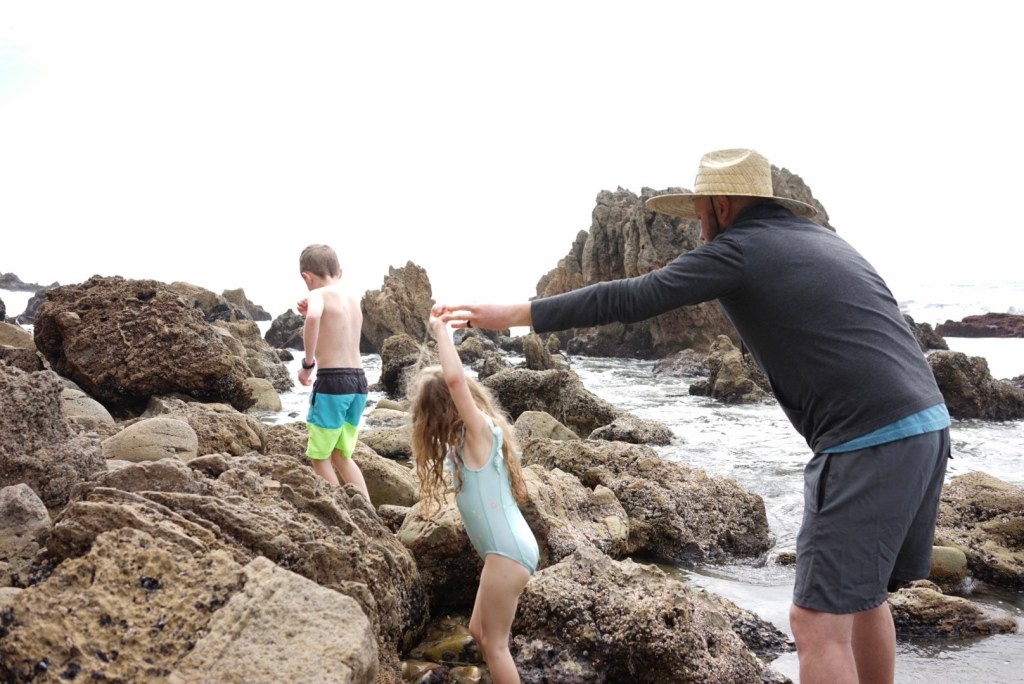
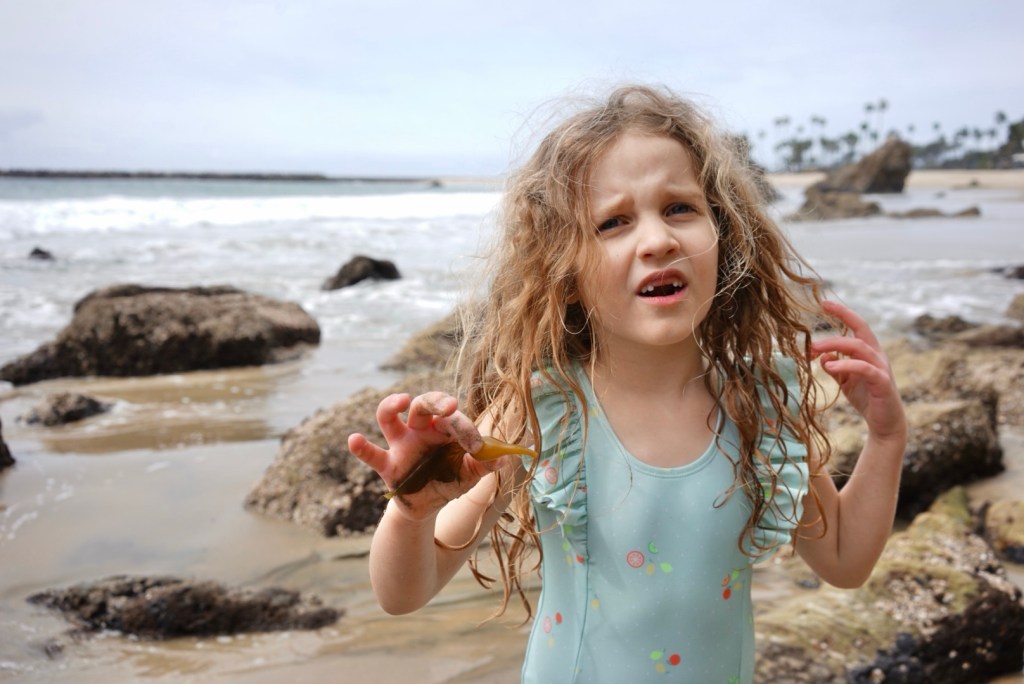
We had planned to leave Shep at the house with my parents, knowing our plans for the day just wouldn’t be accessible for Shep. We specifically headed to Corona Del Mar Beach so the kids could kick off their ocean science unit for school by exploring the tide pools and the sea life that makes its home there. As we walked down the incredibly steep slope leading to the shore, it confirmed our hunch that we would not have been able to safely push Shep’s heavy adaptive stroller up or down it. Not to mention, his stroller is not suited for being pushed through dry, unpacked sand. We would have been unable to climb over jagged, uneven rocks searching for hermit crabs and sea snails and gently poking the sea anemone. The beach experience we wanted Harrison and Poppy to have simply would not have worked for Shep. We knew this was true, and yet, as I stood watching my older two children frolicking through the waves, I was overcome with grief that Shep was not there with us.

Without a word spoken, I could tell my husband was experiencing the same conflict of emotions as I was. On the drive home, we talked about how our sadness was not just that Shep couldn’t have joined us for some modified, adaptive beach experience; we felt the old ache of wishing he could’ve been there experiencing the beach in the same way his siblings got to. We longed to watch him run into the sea and have it chase him back out. We desperately wanted to hear his laughter and have him voice his awe-struck thoughts about the wild vastness of the ocean. We wished he could climb rocks like four-year-old boys do and yell with elation when he stumbled across a skittering crab. We wanted our day at the beach to be what ordinary families experience— joy. Without grief. 

Our bittersweet day at the beach left my brain lingering over the word “access” and the implications it has on our everyday lives. Access is something most of us never even consider until we’ve had ours denied in some way. Having a disabled son has changed how I view the world in this regard. Spontaneity is replaced by meticulous planning and preparation before any outing with a disabled loved one. Heavy doors, uneven terrain, staircases, crowded places, and narrow walkways are all to be considered when you are navigating life with a wheelchair.  And this is simply looking at accessibility through a lens of physical disabilities. Having true access to something is also affected by cognitive disabilities, communication limitations, sensory processing issues, etc. For the disabled community, access almost always requires a modified experience. And when sufficient modifications cannot be made, it means missing out and sitting on the sidelines of life. 

Shep did not have access to the beach day our family experienced. The rest of our family, without a second thought, walked down a steep hill, onto the sand, into the water, and up and over rocks. Barriers and obstacles made it such that Shep had no means of approaching the beach the way we did with his limited physical abilities and the equipment we currently have for him. Inaccessibility is a heartbreaking reality in Shep’s life that naturally leads to separation and missed opportunities. 

While most of us have not experienced the sting of inaccessibility due to physical limitations, Ephesians chapter 2 speaks of a different type of barrier we all face— our inherent separation from God. Verse 12 describes how, because of our sin, we were “separated from Christ . . . having no hope and without God in the world.” Faced with the insurmountable barrier of perfectly keeping God’s law, we were denied access to God and to hope. Sin is the universal disability that prevents us from truly approaching God. 

BUT the chapter goes on to say, “But now in Christ Jesus you who once were far off have been brought near by the blood of Christ . . . through him we both have access in one Spirit to the Father” (Ephesians 2:15, 18). Friends, Jesus broke down the barrier we could not climb by living the perfect, sinless life we never could and exchanging our guilt for His righteousness. Jesus is our access. By His blood, we are made right with God, and we gain not only a relationship with Him, but also the hope of Heaven. I can’t think of a single thing that would be more devastating to miss out on than this. 

As sad as it is that Shep will not have access to every place and experience here on earth, that pales in comparison to the tragedy of not having access to our God who loves us. I’m so thankful for the price Jesus paid to make a way for me to have a relationship with my loving Father here on earth and a future in Heaven with Him. There, He will make all things new and whole. We will no longer be bound or hindered by the things that hold us back now and sadness will be no more. Man, do I long for Heaven. I can’t wait to get there and take my Shep to the beach. 

A POPPY KIND OF LOVE

My husband, Daniel, and I worried about bringing another baby home when Shep came along. Our middle child, Poppy, was not even 2 yet and she was still very much a baby herself in many ways. She was emotionally needy and required so much attention. We fully expected her to NOT transition well to having another baby around.

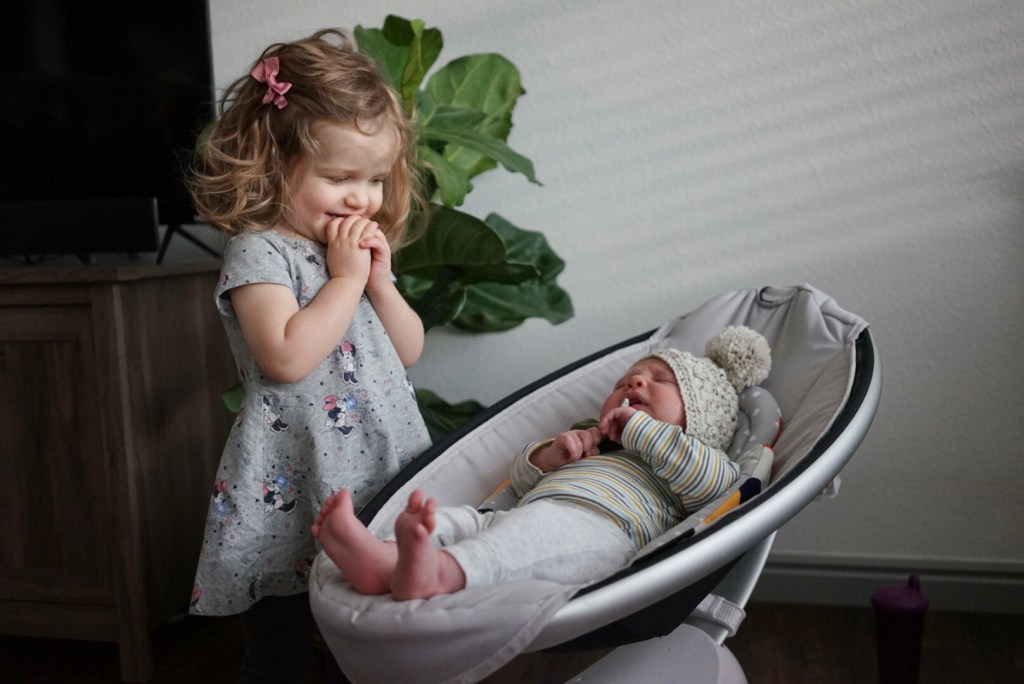
To say Poppy proved us wrong would be an understatement. This video was taken when Shep was just weeks old—in the very short season of his life that we were blissfully unaware of how disability was about to rock our world. From day one, Poppy has nurtured and cared for Shep without any prompting. She has never been deterred by his crying or fussiness, but rather, pushes in to try to soothe him. She gets a different look on her face when she’s with Shep—one of pure, unconditional love and adoration. I can see it in this video and I still see it today. 

Poppy’s affection for Shep did not stop when he started missing milestones. Or when we put him in clunky and foreign pieces of adaptive equipment for the first time. It didn’t stop as she sat through countless hours of therapy with him. Or when she began explaining to people, “he has a disability and he can’t talk so he won’t answer you back” without skipping a beat. It didn’t stop when we received his diagnosis and realized he’d never be the little brother we thought she’d have.

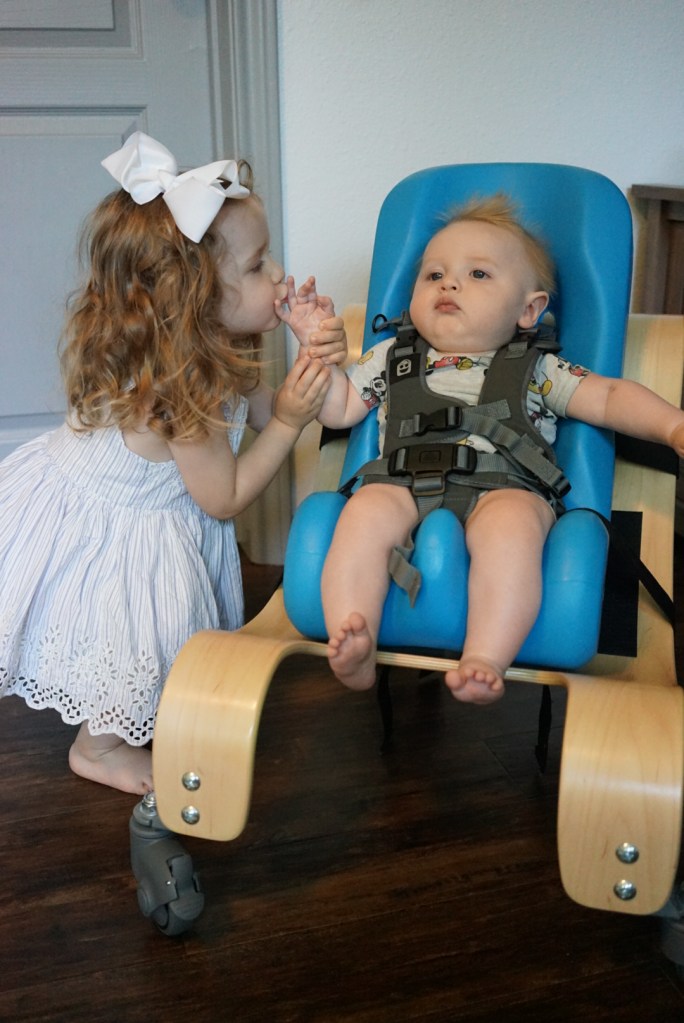
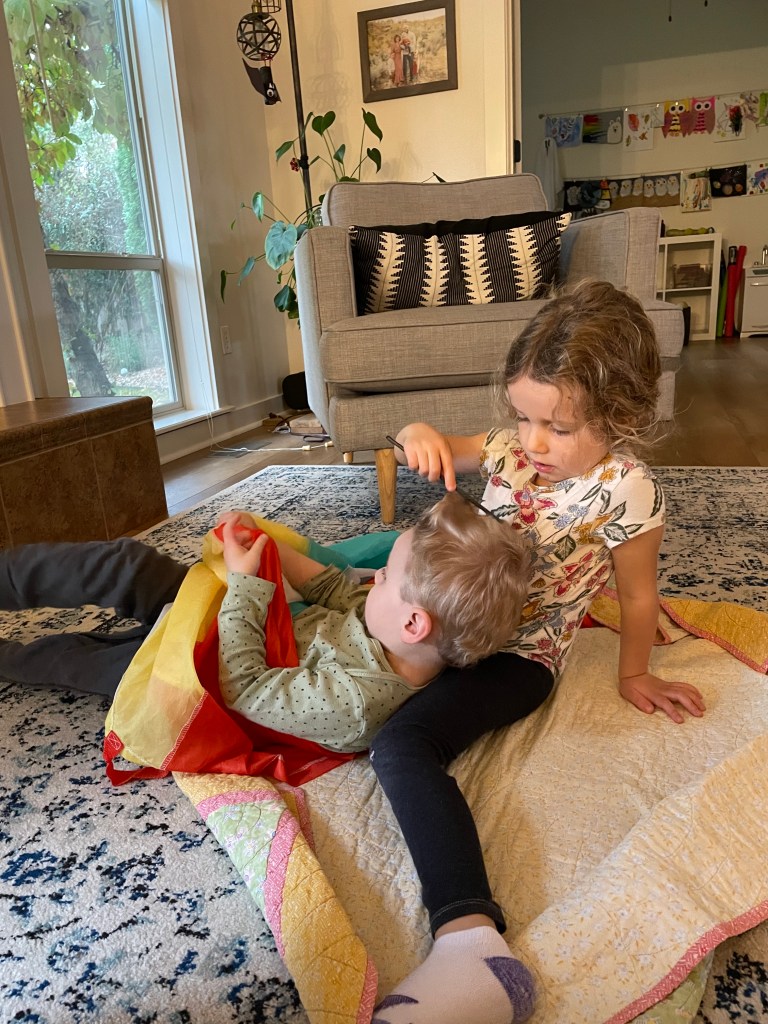
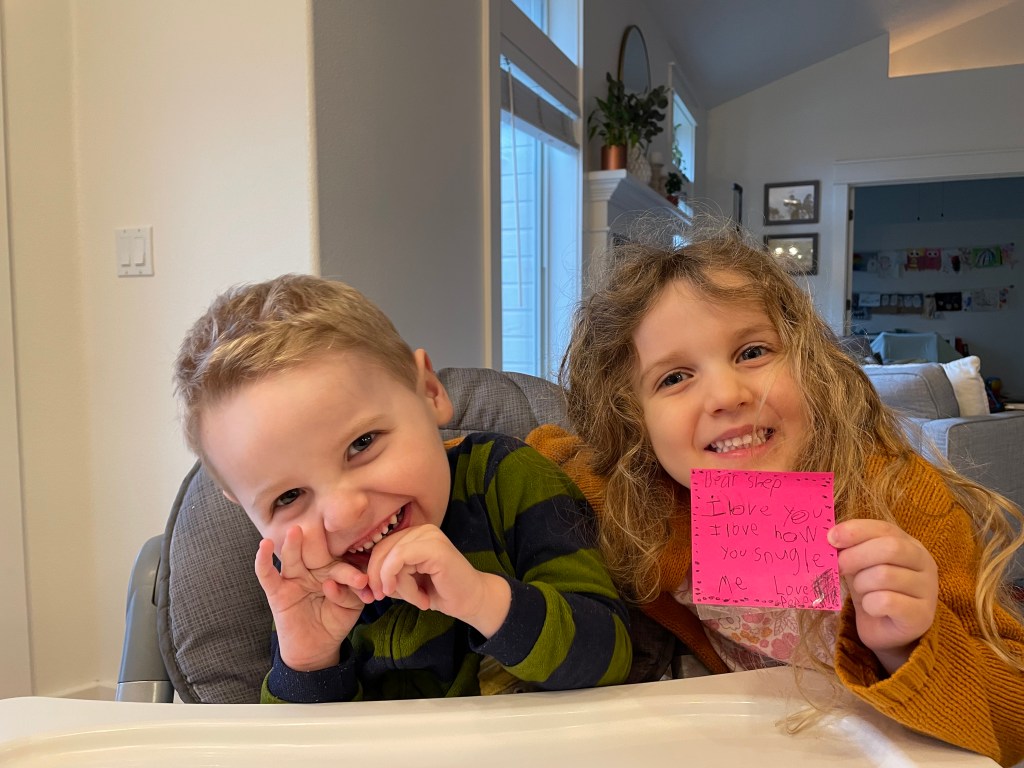
Poppy still smothers Shep with hugs and kisses. She snuggles him, combs his hair, and writes him little love notes just because. Poppy reads books to Shep and sings “Jesus Loves YOU” when he’s sad. She plays games with Shep and responds to him as if he had said something aloud to her. She protects him, helps him, and includes him. She “gets him” better than anyone else. I believe God hand-crafted Poppy for Shep. She is well aware of his disability, but isn’t phased by it in the slightest. To her, he’s just Shep. He’s not a problem to be solved, a broken person to fix, or a case for pity. He’s simply loved. Poppy is the puzzle piece that makes Shep fit in with a world unfit for him.

In a way, it feels like Poppy has always known (better than we have) who Shep is and who he would be and she loves him all the same. Isn’t this the way God loves us? 

Psalm 139 is an ode to this very idea. The psalmist, David, begins with, “O Lord, You have searched me and known me! You know when I sit down and when I rise up; you discern my thoughts from afar. You search out my path and my lying down and are acquainted with all my ways. Even before a word is on my tongue, behold, O Lord, you know it altogether” (verses 1-4). He continues to describe how, from the womb, God intimately knew and intricately designed every part of us (verses 15-17). In short, God knows us better than we even know ourselves. He knows all our hopes, dreams, talents AND our flaws, failures, heartless deeds, and impure thoughts. Yet, He loves us all the same. Through a series of rhetorical questions, in verses 7 through 11, David drives home the point that there is nowhere we could go or nothing we could do that would ever separate us from God’s presence and His love. In the book of Romans, the apostle Paul echoes this point when he says, “And I am convinced that nothing can ever separate us from God’s love” (Romans 8:35a, NLT). 

Is this not the deepest desire of every human heart—to be fully known AND fully loved? The beautiful display of love I see between my daughter and my youngest son merely scratches the surface of the depths of God’s love for me and for you. I am fully known—in all my brokenness and imperfection—and fully, deeply loved. And so are you, my friend. There is no greater love than this.